The Will of Mrs. Vera Rossen
In the spring of 1957, in a quiet suburb outside Philadelphia, Tom Rossen woke up in his grandmother’s body.
He knew it immediately. The weight of the limbs was wrong-soft, slow, heavy with seventy-six years. The hands that rose in front of his face were spotted and veined, the knuckles swollen. When he tried to sit up, the mattress sighed beneath him in a way his own never had. The room smelled of lavender sachet and old paper. His grandmother’s room.
A man stood at the foot of the bed. Thin, precise, wearing a dark suit that looked expensive even in the dim morning light. Mr. Erwin. Tom had met him only once before, at a family dinner, when the man had spoken softly to Vera Rossen about “arrangements.”
“You’re awake,” Erwin said. “Good. We haven’t much time.”
Tom’s voice came out high and thin, cracked with age. “What did you do to me?”
“I put you where you needed to be.” Erwin’s tone was clinical. “Your grandmother is… elsewhere. Safe enough, for now. You are Vera Rossen. For the next twenty-four hours, at least. Possibly longer.”
Tom tried to stand. The body obeyed slowly, knees complaining. He caught his reflection in the dresser mirror: white hair pinned neatly, soft jowls, the mild, distant eyes of a woman who had outlived most of her generation. He looked away.
“There’s a gathering this afternoon,” Erwin continued. “Old friends of hers. Neighbors. A few distant relatives who still pretend to care. They’ve begun to whisper that Vera is no longer of sound mind. That she’s confused. That she should be… looked after. Properly. In a home.”
He stepped closer.
“You will attend that party as Vera Rossen. You will speak as she would speak. You will remember the names, the stories, the little habits. You will convince every person in that room that the old woman is still herself-sharp, capable, in full possession of her faculties. If you fail, or if you refuse, she will be taken away. And you will still be inside her when they lock the door.”
Tom’s new hands trembled. “Why?”
“Because the will needs changing,” Erwin said simply. “Tomorrow morning, if tonight goes well, you will go to her lawyer’s office and execute a new will. The provisions have already been prepared. You will sign them in her name. After that… we can discuss returning you to yourself.”
Tom understood the rest without being told. The new will would cut him out. Completely. The house, the modest investments, the small trust-everything that would have come to him as her only grandson would go elsewhere. To charities. To distant cousins. To whoever Erwin represented.
The irony was not lost on him even then.
---
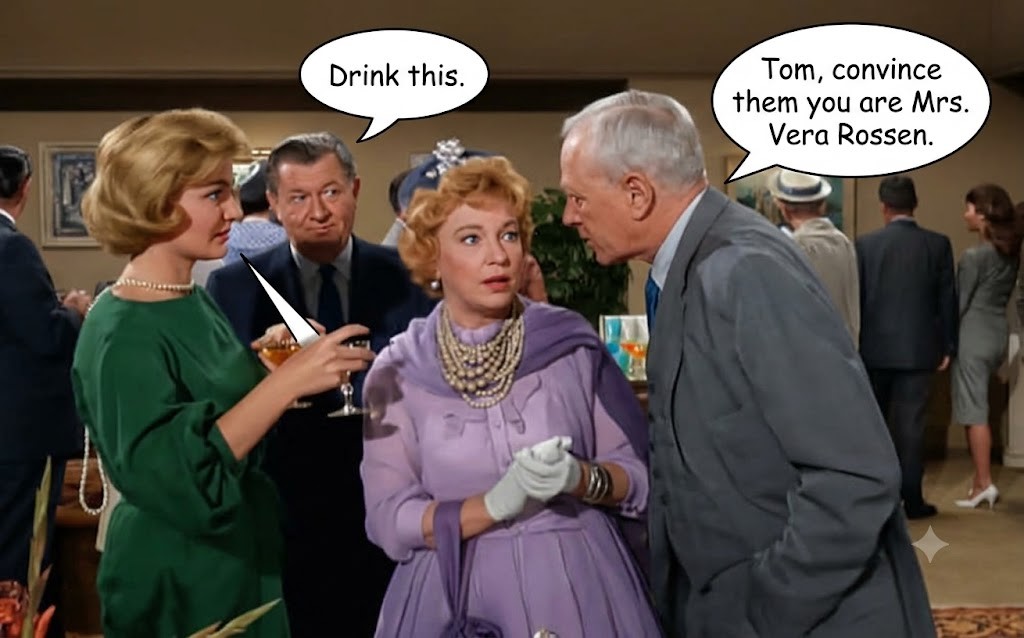
They dressed him carefully. A light purple gown that fell in soft folds to just above the ankles, its fabric catching the afternoon light with a gentle sheen. Over it they draped a darker purple wrap, the richer shade framing the lighter one like a shadow. A multi-strand pearl necklace rested against the collarbone, its matched earrings glinting at each ear. A large jeweled hair accessory pinned the white hair into place with quiet authority. Light-colored gloves covered the spotted hands, and multiple bracelets clustered on one wrist, chiming softly with every movement. In the other hand she carried a purple purse, the final deliberate note in the ensemble.
Erwin coached him in the car on the short drive to the house where the party was already beginning.
“She calls her old friend Harriet ‘Hat.’ She takes her tea with two sugars and a little cream. She dislikes the mayor’s wife and will not hide it. She remembers the flood of ’36 in exact detail. Do not invent. Do not hesitate. And do not, under any circumstances, speak like a twenty-four-year-old man trapped in an old woman’s skin.”